Gerrard Winstanley @ 350: A Brief Reflection
Author: Professor Andrew Bradstock
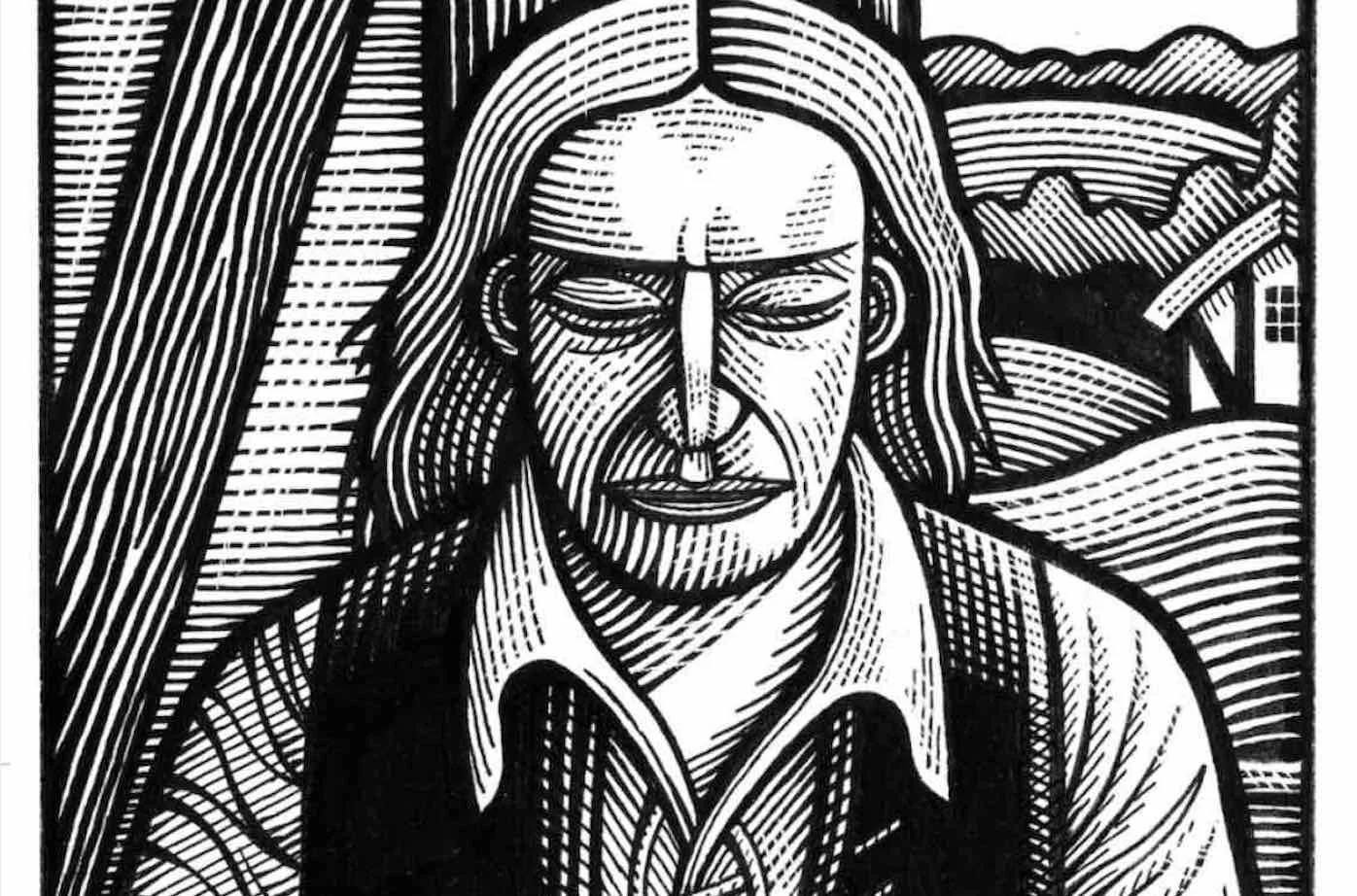
September 2026 marks the 350th anniversary of the death of Gerrard Winstanley, one of the most remarkable, if enigmatic, figures of the English Civil War period. While many details of his life remain unknown, and he was in the public eye for barely a year before disappearing as unspectacularly as he appeared, his contribution to political and theological thought, as the leader and main theorist of the Digger movement, continues to exercise his enthusiasts and detractors alike. Not without reason did the editors of his OUP ‘Complete Works’, published in 2009, describe him as ‘the most obscure Englishman currently assigned any reasonable degree of historical significance throughout the entire post-medieval period.’ [1]
What distinguishes Winstanley from most of his contemporaries is the originality and far-sightedness of his ideas. Writing in the late 1640s, when groups such as the Levellers were arguing that the outcome of the civil war, and the execution of the king, paved the way for an extension of the franchise, Winstanley contended that a far more radical approach was needed. The root of the misery and suffering endured by ‘the poor oppressed people of England’ lay not in their being excluded from the political process, he maintained, but in the system that allowed the rich and powerful to enclose the land and keep them from its benefits.
With the monarchy abolished, he argued, Parliament must seize the opportunity to dismantle the whole inequitable system of private land-ownership over which the king had presided, and restore the land to its rightful owners, the common people. And for Winstanley this was not just theory, for the name ‘Digger’ references the method he adopted to set off this process himself – the gathering together of a community on common land to break the soil, plant grain and vegetables, and share the results. This he initiated on St George’s Hill near Weybridge in Surrey on 1st April 1649, having received a ‘command of the Spirit’ to ‘Worke together. Eat bread together; declare this all abroad.’ [2]
--- // ---
Winstanley’s critique of the system of private land-ownership begins with the premise that the earth was originally created for all to share: ‘In the beginning of time, the great Creator Reason, made the Earth to be a common Treasury’, he writes in The True Levellers Standard Advanced. [3] The concept of individual ownership of the land was not written into the Creation narrative in Genesis, and originally the earth was common to all, with the more physically able helping the weaker by working harder. However, this arrangement became corrupted once the stronger began to argue their right to a larger share of the earth than the weaker – Winstanley’s understanding of ‘the Fall’ – and began appropriating land for themselves.
In believing that the earth must be restored to communal ownership, Winstanley again went further than most of his contemporaries. Conventional wisdom of the time was that, while a golden, property-less age may once have existed, something innate in human nature made its realization again impossible: ‘fallen’ humankind had lost the innocence it once enjoyed in Eden, and was now so subject to impulses of greed, fear, envy and lust that for society to exist in any organized form, accommodation had to be made to the need to own and protect private property. Hence the concern of political philosophers was to construct the most workable social structures permitted by humanity’s limitations and weaknesses – in the case of Winstanley’s contemporary, Thomas Hobbes, one where anarchy, the inevitable consequence of unbridled competitiveness, was held at bay by a strong authoritative sovereign figure.
Winstanley, however, not only rejected the position Hobbes was to articulate in Leviathan, but in a passage that remarkably anticipated much later thinking, suggested that human nature is largely shaped by the prevailing social conditions.
I am assured that if it be rightly searched into, the inward bondages of the minde, as covetousness, pride, hypocrisie, envy, sorrow, fears, desperation, and madness, are all occasioned by the outward bondage, that one sort of people lay upon another,
he wrote.[4] For Winstanley, there would be no need of laws or punishments once people had put an end to the practice of buying and selling.
The prelapsarian community will be attainable once private property is abolished and Reason – his preferred name for God – reigns once more in the human heart, Winstanley thought. His understanding of the Fall as the introduction of private property, and not a separate state which gave rise to it, lead him to envisage a situation in which, as Reason once again held sway, people would embrace the idea of communitarian living as the only rational and just way to co-exist. The breakdown of the system of private ownership would then become unstoppable, and the practice of hiring labour, the only way that the rich could manage their own huge estates, would begin to disintegrate. It was a vision with the potential to transform English society in the most radical way imaginable.
--- // ---
As with many other radicals, theology was woven into Winstanley’s thinking, and underpinning his hopes for the restoration of society to its original communitarian state was a belief that such a restoration constituted the second coming of Christ. Winstanley believed that Christ would not appear in some sudden or dramatic way, or even as an individual person, but would ‘rise up’ in men and women and enlighten them to the fact that having the land in common was the only rational way to live. The Second Coming, in other words, would take place gradually, effecting a change at the level both of the individual and society.
Some commentators have seen the act of digging as largely symbolic, a ‘signal’ that the new age was dawning, or that the Diggers were ready for God to transform society in some supernatural way, not an attempt to realize that transformation themselves. There is a sense in which Winstanley must have understood the fulfilment of his vision of England becoming a common treasury to be dependent upon some kind of divine intervention, because in purely economic terms it was unworkable: it would have required a large section of the population to be fed from land which had hitherto not been arable.
Yet believing that his programme coincided with the divine purpose did not preclude the necessity of working to bring that purpose about. In fact, quite the reverse, as his reflection in A Watch-word to the City of London that ‘action is the life of all, and if thou dost not act, thou dost nothing’ makes clear.[5] Further, while the Diggers’ action was inspired by their conviction that this was a propitious time to begin remaking the earth as a common treasury, they were also driven by their hunger and the simple need to feed themselves and their dependents.
--- // ---
Winstanley’s theology, like that of all the ‘radicals’ of his day, was very different from that of the Established Church. Whereas the priests, Winstanley argued, held God and Christ ‘at-a-distance’ so that only they could mediate them to the people, he stressed the immanence of God and how everybody has their creator dwelling within them (hence his use of the term ‘Reason’ rather than ‘God’, which helped remove the ‘otherness’ the clergy invested in the latter term.)
Winstanley thought that doctrines like Heaven and Hell were invoked by the clergy to keep the people in subjection to them. Indeed, the Church’s whole interpretation of the faith was designed to instil in its hearers what he termed ‘Imagination’, a feeling of incompleteness, fear and uncertainty which ensured their subjection to the authorities. But people need not be bowed down by such teaching, Winstanley argued, since all have God or Reason within them, and can judge the meaning of Scripture for themselves.
Like many in his day, Winstanley had no time for the established clergy, dismissing them, with landlords and lawyers, as an ‘unholy trinity’ upholding the present iniquitous system. But whereas many were content to attack these groups individually, Winstanley developed a coherent analysis of their inter-connectedness, what later political theorists might want to term their shared ‘class interest’.
The strongest hint of this is to be found in his concept of ‘kingly power’, a collective term he employs for those institutions which together maintained the economic system burdening the poor of his day. The word ‘kingly’ acknowledged, not only that it was the monarch himself who was the ‘figurehead’ of the established order, but the role of William the Conqueror in originally uniting under him its chief components: the lawyer – whose sole concern is ‘the disposing of the earth’ – and the clergy, whose duty was to persuade the people to accept the king’s right to call the land his (their reward for this being the tithe system).[6]
The concept of ‘kingly power’ played a vital role in shaping Winstanley’s response to the crisis of the 1640s. While he welcomed the removal of the monarchy and the Lords, he recognized that in themselves these developments would not be sufficient to lift the people’s burden: kingly power was not in the hands of the king alone, but in those of the landlords, the lawyers, and the ‘tithing-priests’. With Charles’ execution, the
top-bow is lopped off the tree of Tyrannie, and Kingly power in that one particular is cast out; but alas oppression is a great tree still, and keeps off the sun of freedome from the poor Commons still,
he wrote.[7] His solution was again more radical than most: in addition to taking away the king and the Lords, the new government should remove the power of landlords, priests, and judges, and then people would be free.
--- // ---
Unsurprisingly, the Diggers met with opposition from those most threatened by their actions, including local landowners. By August they decided to move from St George’s Hill to Little Heath at nearby Cobham, although their reception there was no friendlier. So ferocious were the attacks upon Winstanley’s community that it lasted barely twelve months, and was eventually wound up after the destruction of their crops and houses, and their indictment at the Surrey Assizes for disorder and unlawful assembly. Although other Digger communities sprang up across the country, the best-known being at Wellingborough in Northants and Iver in Buckinghamshire, none was able to survive, and one may only speculate how far the Diggers’ call to the ‘poor, oppressed people of England’ to join them in remaking the earth as a ‘common treasury’ might have transformed the pattern of land ownership in England and beyond.
Despite the ferocity of the attacks on his community, Winstanley never advocated the use of violence: he was clear that true freedom could not be obtained by means which actually ended up enslaving people, and that the use of the sword would merely result in one section of society lording it over the other, as was the case at present. And even in defeat he continued to picture the new society that might emerge from the ashes of the old, setting out in his final work, The Law of Freedom in a Platform (1652), his vision of a new order, in which land was communally tilled, and food and commodities available for collection from storehouses without the need for money. In some respects his new society reflected More’s Utopia, though he never admitted using any source for his ideas other than Scripture.
--- // ---
After his death in 1676 not much was heard of Winstanley until the end of the nineteenth century, but the publication of his collected works in the USA in 1941, and the writings of the British historian Christopher Hill, did much to foster academic and popular interest in him in the following century. His writings have generated many commentaries, and he has inspired films, songs, plays, and even fiction. Importantly, the questions which preoccupied him remain relevant, not least in an age of widespread concern about the environment and future well-being of the planet.
Even leaving aside the wider question of whether ‘the earth’ should in principle be ‘owned’ and traded by individuals or corporations or nation states – which Winstanley, of course, was not afraid to ask – issues as diverse as the right to roam, the building of motorways, land tax, the selling-off of school playing-fields, and squatting, are all manifestations of his concern that the earth should once more give sustenance to all her children. Perhaps the renewed popularity of ‘allotmenteering’ and local food production – a response to concerns about food miles, food security and food price inflation – is a sign that we still see digging as critical for our survival.
Endnotes
1. Corns, T.N., A. Hughes and D. Loewenstein, The Complete Works of Gerrard Winstanley, 2 vols, Oxford: Oxford University Press, 2009, I, 2.
2. Winstanley, G, The New Law of Righteousnes (1648), in Corns, Hughes, Loewenstein 2009, I, 513.
3. Corns, Hughes, Loewenstein 2009: II, 4.
4. Winstanley, G, The Law of Freedom in a Platform (1652), in Corns, Hughes, Loewenstein 2009: II, 296.
5. Corns, Hughes, Loewenstein 2009: II, 80
6. Winstanley, The Law of Freedom, in Corns, Hughes, Loewenstein 2009: II, 297-8.
7. Winstanley, G, A New-yeers Gift for the Parliament and Armie (1650), in Corns, Hughes, Loewenstein 2009: II, 112.
--- // ---
Andrew Bradstock is an emeritus professor of the University of Winchester and a former Secretary for Church and Society with the United Reformed Church. From 2009-13 he was inaugural Howard Paterson Professor of Theology and Public Issues at the University of Otago, where he established New Zealand’s first Centre for Theology and Public Issues. He has written widely on the relationship between faith and politics, including Radical Religion in Cromwell’s England: A Concise History from the English Civil War to the End of the Commonwealth (London: I B Tauris, 2011). His most recent book is David Sheppard – Batting for the Poor: the authorised biography of the celebrated cricketer and bishop (London: SPCK, 2019), and he also contributed to Celebrating Forty Years of Faith in the City, edited by Terry Drummond and Joseph Forde (Durham: Sacristy, 2025). Andrew was elected a Fellow of the Royal Historical Society in 2013.