Liberation Theology in Britain:
Exploring Alternative Histories
Author: Ross Hardy
Born out of the extreme poverty and violence of military regimes and Cold War-era oppression, Liberation Theology was a call for a comprehensive overhaul of theological and pastoral frameworks. Based on a hermeneutic conceptualization of Christ as an oppressed radical, proponents of this emergent theology espoused a ‘preferential option of the poor’, a reinterpretation of scripture that protagonised marginalised peoples living in poverty. Perhaps the most influential Liberationist in the Latin American context was Gustavo Gutierréz, whose seminal text Teología de la Liberación (1971) as well as his prolific career thereafter, established him as ‘the father of Liberation Theology’.[1] Despite the primacy of Gutiérrez’ work, he was undoubtedly not the only Liberation theologian espousing these views. There was in fact a pantheon of progressive theologians across the continent and beyond developing a series of liberating theologies. Works such as those of Jon Sobrino, James Cone and Leonardo Boff each refined liberating praxis in their own theopolitical contexts, developing a self-critical ‘hermeneutic circle’ that would help to establish what Gutiérrez would call ‘a permanent cultural revolution’.[2]
While this iteration of the movement developed by Gutiérrez and others like him was inherently Latin American, Liberation Theology was deeply entrenched in globalised systems of inequality and wider historical context. The transnational character of episcopal conferences, such as those at Medellín in 1968 and Puebla in 1979, combined with global historical developments, such as The Cold War, The Civil Rights Movement and various revolutions of Latin America and beyond, meant that the relevance of the Liberationist message was heard at a time of increasing international solidarity amongst oppressed people.[3] Liberationist ideas developing in the Americas were received around the world, by both other Global South nations, and by the marginalised peoples of the Global North, including those in Britain.
In the case of a British Liberation Theology, as the context of the UK is markedly different from that of Latin America, there are several components of American Liberationist ideas that could not be transferred easily into a British iteration. For example, the foundation of a base ecclesial community, developing hermeneutic understanding in the broadly rural context of an oppressed Catholic-majority nation, does not translate neatly into a context of a multi-faith urban presence, a Church that was decidedly more middle-class, and a parish structure that had ‘failed to adapt to the demographic changes brought about by the industrial revolution’.[4]Gutiérrez himself, when attending theological conferences in Britain, frequently refused to answer the question of what a British Liberation Theology would look like, claiming that it must be conceived of locally.[5]
Scholars writing about British Liberation Theology have grappled with its relevance, the position of the Church in society, as well as the theoretical prerequisites for a uniquely British Liberation Theology. While undoubtedly critical in deepening the theological and historical understanding of Liberationist ideas, they often belie another essential dimension of Britain’s relationship with Liberation Theologies, that is, the countless individuals and organisations that have been deeply and continuously impacted by their reach. As the Argentine theologian Marcella Althaus-Reid made evident: ‘discourses of liberation have a value which comes not from their textual force, but from the realm of human activity, that is, from the rebellious people’.[6]
It is in this spirit that I undertook this research. Developing an approach that focused more in depth on those individuals and organisations we may call ‘practitioners’ of Liberation Theology, as well as the movement’s treatment by the wider public. I was therefore eager to explore source materials that have been previously undervalued, including Church policy reports and recommendations, archival documents that detail the correspondence of Church and state actors, data taken from the Charity Commission for England and Wales, as well as oral history testimony drawn from interviews with UK-based theologians and activists.[7] I must clarify that this research is more focused on the Latin American ideas; other liberating theologies such as Feminist, Black and Indigenous Theologies are important contributions that merit their own research and will not be treated in depth here.
By exploring the historical reception of Liberation Theology in Britain beyond the more commonplace academic and ecclesiastical voices, the impact of this movement can be understood in more than just intellectual or theological terms. In conducting this research I have found that Liberationist ideas took on multiple meanings and articulations, with its reception largely contingent on the positionality of the recipient. To account for the multifarious impacts of the movement in Britain is implausible even in an MA dissertation, let alone this article. However, in my research I found there to be a paucity of valuable sources beyond scholarly articles or theological works. The following is merely a sample of these sources that proved useful to my work.
In 1970, a concerned letter from the Foreign and Commonwealth Office (FCO) arrived at the British Embassy in Bogotá, with an attached article from the French national newspaper Le Monde. The article detailed the formation of a new group of ‘rebel priests’, who had denounced the Church and governments of Colombia and the United States. [8] The purpose of the letter was to ascertain if the supposed leader of the group, Fr. Gustavo Perrez, was the same priest that had been in regular contact with British officials at the embassy. The reply affirmed this, but gave assurance that the article was unfounded and ‘discounted all around’.[9] The embassy then sent an account of Perrez’ career and political beliefs, namely, his growing anti-capitalist views and whether he could still be classed as a ‘reformist’ or a revolutionary.[10] The final section of this letter was a recommendation for the embassy to publish some material on cooperative agriculture that would help to moderate the more radical views of, according to the letter, those like Perrez ‘of whom there are very many among the thinking people of this continent’.[11] This interaction is one of several I found in my research, and while correspondence between a handful of diplomats does not speak for the entirety of the British state, these documents do offer some insights into the way the Marxist elements of Liberation Theology created a sense of unease for British government officials, who maintained a concerned, surveillant distance from the movement.
A similarly valuable means of interpreting the early receptions of Liberation Theology is through examination of popular faith organisations and their publications, more focused on the practical application of Liberationist ideas and how they could shape faith-based activism. One such movement is the Student Christian Movement (SCM). Between 1965 and 1975, in response to a global environment of ‘revolutionary student unrest’, the SCM departed from pure theology, seeking to address issues in the secular world. [12]
In January 1973, the SCM sponsored the Seeds of Liberation conference in Huddersfield. The three-day event was designed to provide a platform for Christians to explore their spirituality in political contexts and invited members of the clergy, laity, political activists and academics to share their views and experiences with faith and social justice. In an interview for this research, one attendee of the conference, a student at the time, detailed how at the conference ‘there was a lot of discussion about Liberation Theology, particularly Gutiérrez and the Brazilian Helder Câmara’.[13] The same attendee went on to work for decades in South East Asia for BRAC, a development and education organisation, reporting that for them and their colleagues, Liberationist ideas have been essential in their work.’[14] Evidently, while the SCM conference of 1973 was not explicitly organised to explore Liberation theology per se, its presence was tangible, part of a wider international dialogue that promoted the necessity to address injustice against a global backdrop of revolutionary and radical Christianity. This speaks not only to the relevance of this conference, but equally to the value of these grassroots movements and events as a source base for understanding the larger trajectory of Liberationist ideas in Britain.
Another valuable historical source is the abundance of newspaper articles that have been digitised and made accessible through online archives. During my research, I found no shortage of Liberation Theology in the British press. By focusing on opposing publications, namely The Daily Mail and The Guardian, both the bipolarity of the British media and political climate, as well as the incongruence of the public and academic perception of Liberation Theology in Britain become clear.
In 1983, The Daily Mail published a scathing review of Channel 4’s El Salvador’s Crucified Church (1983), a documentary on Liberation Theology in El Salvador. The review, entitled ‘Faith With the Loaded Gun’ reduced Salvadoran Liberation Theology to a ‘populist cause’, denouncing the movement as a ‘deformed theology’, while claiming that the rise in Evangelical Protestantism in the region was due to the ruling class’ belief that ‘the left wing element in Catholicism is now too strong’.[15] The same critic would return two years later, with a relatively balanced review of BBC One’s The Holy City (1986), reporting that the drama was moving, but contained ‘more than a touch of…that left-wing trend in Christian theology underscored by Marxist influences’.[16] These reviews are just one example of the several articles about Liberation Theology published in the Daily Mail in the 1980s, with the coverage frequently overemphasising the threat of its Marxist components, and generally focusing on the more scandalous developments in the movement's history.
Contrastingly, The Guardian was more positive in its coverage of Liberation Theology and at times saw it as an applicable solution to the crisis of British inner cities in the 1980s, giving a voice to its British proponents that felt it had been ‘deliberately channelled to the edges of Church life.’[17] From as early as 1980, journalists from the Guardian were suggesting the movement was a ‘return to the real meaning of Christianity’ and condemning the Catholic Church for upholding the status quo.[18] While these publications diverged significantly in their coverage of Latin American Liberation Theology, both the Daily Mail and the Guardian communicated the tense and antagonistic political climate in which their articles were produced and represent a valuable yet often overlooked resource in the understanding of British Liberation Theology’s history.
One final example of Liberation Theology’s impact that is not often explored in academic literature, is the profound impact the movement has had on faith-based charitable giving in Britain. The most visible manifestation of this is likely the establishment of the Church Urban Fund (CUF) in 1987. The fund was created as a direct result of the landmark publication Faith in the City (1985), which had as a key part of its theological priorities, Latin American Liberation Theology.[19] The fund originally aimed for a charitable expenditure of £4 million per year for 18 years, listed in one fundraising directory in 1990 as the 18th largest grantmaking trust in the country.[20] The fund emphatically exceeded this initial target, continuing in the present day to provide grants to a diverse range of both faith-based and secular programmes, with its most recent expenditure (at the time of writing, November 2025) totalling £3.4 million. [21]
While undoubtedly one of the larger examples, the CUF is just one organisation that has benefitted from Liberationist ideas as part of its charitable objectives. In combing through data from the Charity Commission for England and Wales, many organisations whose origins and grant making enshrine the same Liberationist values as the CUF and the Faith in the City report become apparent, with a conservative estimate of £20 million in charitable expenditure in 2024 alone. A full treatment of these varied organisations and the nuances of their theological priorities is impossible and the list is by no means exhaustive. However, their existence and in some cases their substantial economic size, is a tangible example of the way in which Liberationist principles have had a persistent and lasting effect on British civil society, highlighting the value of non-academic sources in piecing together the story of Liberation Theology in Britain.
Overall, through consistent analysis and recontextualisation, academics have provided crucial literature that has deepened the understanding of this movement considerably since its inception. However, much of the scholarship is still preoccupied with the relevance or applicability of Liberationist ideas, as well as what may qualify as a British Liberation Theology. While critical reflection and the intellectual development of these ideas by historians and theologians alike represent an integral part of the history, scholars must equally understand them as only one facet of the narrative. Investigation of the often fluid definitions that Liberation Theology has assumed as it transitioned from a Latin American context to a British one, as well as its varied outcomes in British theology and wider society is essential. This is best achieved by interrogating a broader range of source types beyond academic theology or ecclesiology, with less rigid theological definitions. In doing so, the quality of these sources reveals that, whether it is compatible or not, Liberation Theology had and continues to have a tangible presence in Britain, one whose study necessitates a broader approach than the Church or University alone cannot provide.
If you are interested in reading this research in its entirety, the full dissertation is available on the Urban Theology Union’s website here. If you would like to discuss these ideas or reach out to the author, feel free to send an email to: rhardy280@gmail.com
____________________________
Notes
[1] Eddy José Muskus, The Origins and Early Development of Liberation Theology in Latin America : With Particular Reference to Gustavo Gutiérrez (Carlisle, 2002), p. 11.
[2] Gustavo Gutiérrez, Teología de la Liberación (Lima, 1971; repr. Salamanca, 2022), p. 91.
[3] Steve Striffler, Solidarity: Latin America and the US Left in the Era of Human Rights (London, 2019), p. 95.
[4] Mark Corner, ‘Liberation Theology for Britain’, New Blackfriars, 38.1 (1988), pp. 62–71 (p. 64).
[5] Denys Turner, ‘Liberation Theology in Britain Today’, Political Theology : The Journal of Christian Socialism, 2.1 (2000), pp. 64–79, (p. 65).
[6] Marcella Althaus-Reid, Indecent Theology: Theological Perversions in Sex, Gender and Politics (London & New York, 2000), p. 21.
[7] All oral testimony was collected in line with The University of Sheffield’s ‘Ethical Approval,’ any interviewees named in this dissertation are done so with informed consent.
[8] The National Archives of the UK (TNA): FCO 95/943, Publications: Church Affairs in Colombia; FCO to British Embassy in Bogotá, 2 February 1970.
[9] TNA FCO 95/943, Publications: Church Affairs in Colombia, British Embassy in Bogotá to FCO, 20 February 1970.
[10] TNA FCO 95/943, Publications: Church Affairs in Colombia, British Embassy in Bogotá to FCO, 26 February 1970.
[11] Ibid.
[12] Kenneth Boyd, ‘The Witness of the Student Christian Movement’, International Bulletin of Mission Research, 31.1 (2007), pp. 3–8 (p.6).
[13] Attendee of the Seeds of Liberation Conference, interview with author (19 August 2025).
[14] Ibid.
[15] Mary Kenny, ‘Faith with the Loaded Gun’, The Daily Mail, 26 September 1983, p. 25.
[16] Mary Kenny ‘The Gospel According to Glasgow’, The Daily Mail, 1986 p. 24.
[17] Martyn Halsall, ‘Onward Christian Soldiers?’ The Guardian, 28 August 1981.
[18] Jan Rocha, ‘Liberation Theology: Latin America’s Exotic Way with Religion and Politics’, The Guardian, 16 April 1980.
[19] For more on the significance of the Faith in the City report, see Joseph Forde and Terry Drummond’s edited collection Celebrating Forty Years of Faith in the City. I owe a great deal to the authors for their contributions to my research.
[20] TNA AT 132/12, 'Living Faith in the City', report of the Archbishop of Canterbury's Advisory Group on Urban Priority Areas, Church Urban Fund Report to the General Synod, January 1990. Section 4.1.
[21] Church Urban Fund, Annual Report 2023 (August 2024) Charity Commission for England and Wales Charity Register, https://register-of-charities.charitycommission.gov.uk/en/charity-search [Accessed 12 August 2025].
Ross Hardy is an independent researcher based in Cheshire, who is interested in the reception and translation of Latin American theologies of liberation within the UK. This article summarises the findings of his award-winning MA dissertation, ‘Conservatives, Communists and Christ: Liberation Theology in Britain.’
Author/copyright: Ross Hardy
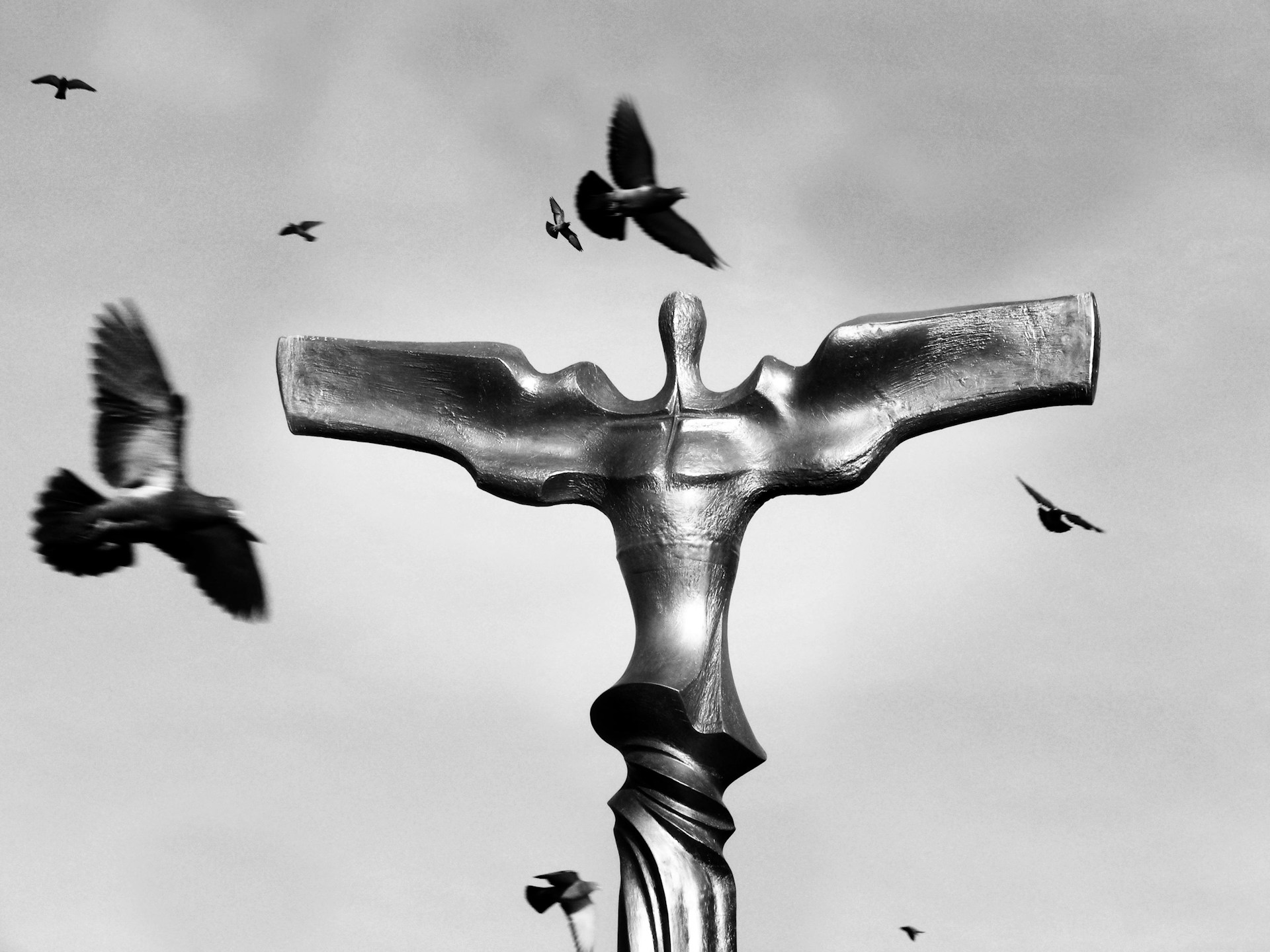
Image: Mircea Solomiea on Unsplash
Resource Type: Article